

Mechanisms & Skin Physiology
Mechanisms & Skin Physiology
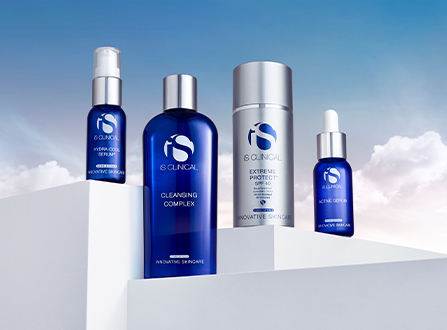
iS Clinical formulations are designed to work in harmony with the skin’s natural biological processes, supporting visible improvement and long‑term skin health. The technologies behind the products are developed to interact on a cellular level, help protect vital skin structures, and support recovery following professional treatments.
L‑ascorbic acid & cellular function
Stabilized L‑ascorbic acid plays a central role in supporting skin function at a cellular level. As a powerful antioxidant, it helps promote brighter, more even‑looking skin while supporting key processes involved in maintaining healthy collagen. Advanced stabilization ensures consistent potency, allowing the skin to benefit from continuous antioxidant support over time.
Extremozymes & environmental protection
Extremozymes® are specialized enzymes designed to help protect the skin’s DNA and structural proteins from environmental stressors. By supporting the skin’s natural defense mechanisms, they help maintain resilience and contribute to long‑term skin health, particularly in environments associated with oxidative or external stress.
Support during post‑procedure recovery
iS Clinical formulations are designed to complement the skin’s natural wound‑healing phases following professional treatments. During this vulnerable period, the skin benefits from targeted hydration, soothing properties, and antioxidant support. This approach helps maintain comfort while encouraging a more balanced and even recovery process.
Anti‑inflammatory pathways
Many iS Clinical formulations incorporate ingredients that support the skin’s natural anti‑inflammatory responses. By helping to calm visible redness and reduce irritation, these products contribute to a more balanced skin environment and help create optimal conditions for repair and overall skin wellness.”


Clinical Validation
Clinical Validation
iS Clinical is developed through scientifically grounded formulation work and a strong commitment to clinical evaluation. The brand’s approach includes independent third‑party testing and blinded clinical study designs where appropriate, with results documented on finished formulations (not only on individual ingredients). Full study summaries are available to read in the iS Clinical Clinical Studies Library via the link on this page.
Key Clinical Study Summaries
Extreme Protect SPF 30 – Thymine Dimer Formation
A skin tissue study evaluated UV exposure with and without product application, measuring thymine dimer formation (a marker of UV‑induced DNA damage). This supports iS Clinical’s focus on advanced protection beyond standard SPF positioning.
Pro‑Heal Serum Advance – Induced Inflammation Study
In a controlled evaluation where inflammation was induced on skin, the pre‑treated side showed minimal visible changes compared with control, supported by histologic assessment. This underpins the product’s positioning for visible redness and stressed skin.
Super Serum Advance – Collagen Synthesis Study
A collagen synthesis study assessed the ability of the formula to support collagen production in fibroblasts, reinforcing the brand’s anti‑aging and skin‑strengthening claims with mechanistic evidence.
Brightening Serum – Clinical Improvement in Pigmentation
A subject study evaluated pigmentation changes over a 12‑week use period, combining investigator assessment and standardized imaging/analysis. This supports claims around improved clarity and more even‑looking tone.
Evidence index
Fitzpatrick, R. E., & Rostan, E. F. (2002). Double‑blind, half‑face study comparing topical vitamin C and vehicle for photodamage. Dermatologic Surgery, 28(3), 231–236.
Traikovich, S. S. (1999). Use of topical ascorbic acid and its effects on photodamaged skin topography. Archives of Otolaryngology–Head & Neck Surgery, 125(10), 1091–1098.
Pinnell, S. R., et al. (2001). Topical L‑ascorbic acid: Percutaneous absorption studies. Dermatologic Surgery, 27(2), 137–142.
Boo, Y. C. (2022). Ascorbic acid as a cosmeceutical to increase dermal collagen. Antioxidants, 11(9), 1663.
Sorg, O., et al. (2007). UV‑induced lipid peroxides and thymine dimers in human skin. JAMA Dermatology, 143(3).
Innovative Skincare. (2016). Extreme Protect SPF 30 Thymine Dimer Formation Study.
Innovative Skincare. (2015). Extremozyme White Paper: Advancement in DNA Repair Enzymes.
Martínez‑Valverde, T., et al. (2022). Efficacy of anhydrous 15% vitamin C. Cosmetics, 9(4), 74.
Al‑Niaimi, F., & Chiang, N. (2017). Topical Vitamin C and the skin. Journal of Clinical & Aesthetic Dermatology.